Dodge City
March 17 - 20
March 17 - 20
Dodge City is one of the most iconic and longstanding themed campsites in Green Park at Sebring International Raceway, famous for its rowdy, party-heavy atmosphere during the Mobil 1 12 Hours of Sebring and other events. It's part of what makes Sebring's infield camping legendary—often compared to the "Woodstock of motorsports"—with a strong emphasis on fan camaraderie, over-the-top decorations, and multi-generational traditions.
Dodge City has been a fixture for decades, with references dating back to at least the early 2010s (and likely earlier, as it's grouped with other "tenured" or "legendary" camps like F-Troop, which started around 1971).
It's frequently described as a long-running family or group tradition, with some sources noting camps in Green Park (including Dodge City) having 43+ years of continuous presence by the mid-2020s—suggesting origins in the late 1970s or early 1980s for certain longstanding groups.
The camp is themed around an Old West/cowboy motif, complete with a Western façade resembling a frontier town (e.g., "Dodge City" inspired by the famous Kansas cowtown of Wild West lore). Features often include:
Hay bales for seating.
A live rooster (a quirky, recurring mascot mentioned in multiple accounts).
A "fish shack" or similar setups.
Seats salvaged from commercial sources for the party setup.
Many attendees are described as retired cops or law enforcement (playing on the "Dodge City" sheriff/Wild West sheriff vibe), which ties into the name and theme—it's like a playful "cowboy camp" for those in blue.
It's positioned in Green Park (often near turns 9-10 or adjacent to spots like La Bomba/Turn 9), known for wild parties, but also deep bonds—fans treat annual visits like family reunions.
In IMSA's official 2025 feature video ("The Legend of Sebring | Why Green Park..."), hosts visit Dodge City directly, interviewing longtime campers about its setup, the 43-year family tradition for some groups, and the mix of "cutting loose" with racing in the background.
It's highlighted alongside other infamous camps (e.g., F-Troop, Turn 10, Party Barge, La Bomba) in fan videos and articles as defining Sebring's unique spirit—endurance racing paired with endurance partying.
Exact founding year isn't pinpointed in public sources (unlike F-Troop's 1971 start), but it's consistently called one of the "legendary" or "tenured" sites, evolving from early fan camping in the infield since Sebring's endurance racing heyday post-1950s. The theme likely emerged organically from group inside jokes or member backgrounds.
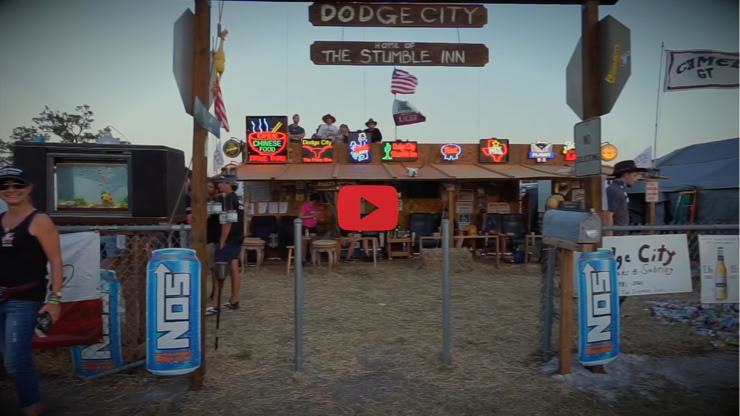
Dodge City - Home of the Stumble Inn Official feature video: Includes a time-lapse of the site build and segments throughout the 12 hour race in 2025.
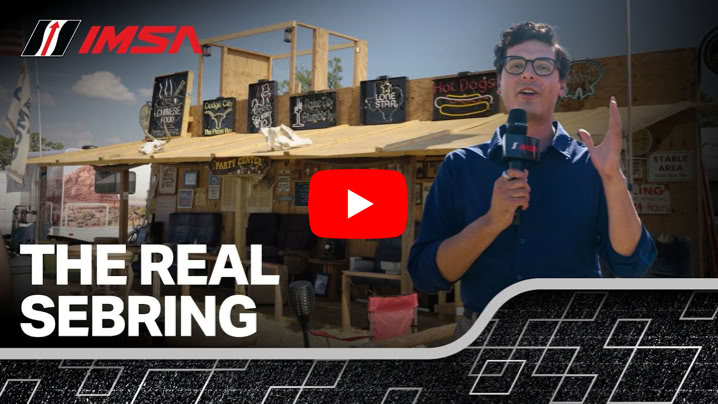
IMSA Official feature on Green Park (includes Dodge City): explores the fandom and camping in Green Park, with a direct segment visiting and interviewing people at Dodge City.
Sebring 12 Hours: Race, Party, La Bomba - A Special Place: An older enthusiast video highlighting various legendary camps, explicitly including Dodge City among others like La Bomba and Turn 7. It captures the party atmosphere around the racing event.
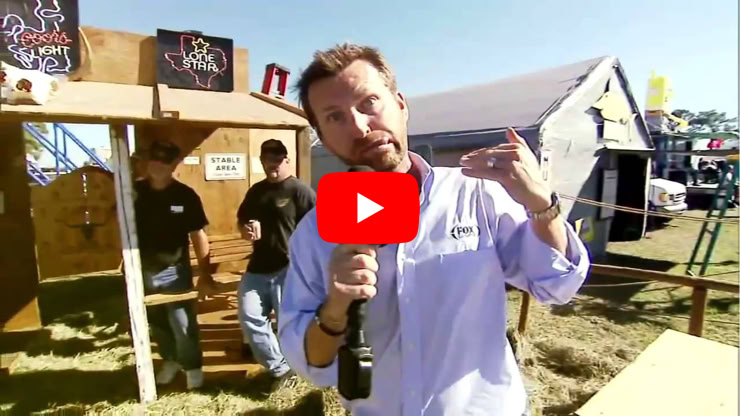
Justin Bell Visits Sebring's Green Park: A tour-style video by racer Justin Bell of the famous Green Park campground (which encompasses Dodge City and similar spots), including informal looks at campsites.
Sebring International Raceway, located in Sebring, Florida, has a storied history rooted in its origins as a World War II military airfield. Originally known as Hendricks Field, the site opened in 1942 as an Army Air Force training base for B-17 bombers. After the war ended in 1945, it was deactivated in 1946 and repurposed as Sebring Airport. The transformation into a racetrack began in 1950 when aeronautical engineer Alec Ulmann, inspired by European endurance races like the 24 Hours of Le Mans, organized the first sports car race on the site's runways and service roads on New Year's Eve. This laid the foundation for what would become one of North America's most iconic racing venues. The inaugural 12 Hours of Sebring, a grueling endurance event that tests both drivers and machines on the bumpy, 3.7-mile circuit, was held in March 1952, establishing Sebring as a cornerstone of international motorsports.
Within this racing legacy, the infield camping culture at Sebring has become legendary, particularly in the area known as Green Park (often referred to colloquially as the "green zone" in fan discussions, though officially Green Park). This grassy expanse between Turns 5 and 10 has earned the nickname "The Woodstock of sports car racing" due to its vibrant, free-spirited atmosphere during the 12 Hours event. Fans arrive weeks in advance, setting up elaborate campsites that blend racing enthusiasm with wild parties, communal bonding, and creative themes. Green Park's reputation stems from decades of traditions passed down through generations, where the focus extends beyond the track to the sense of community and escapism. It's a place where lifelong friendships form amid the roar of engines, and the infield's "raging reputation" masks a deeper loyalty among attendees who return year after year.
Among the most iconic campsites in Green Park is Dodge City, a themed encampment that embodies the rowdy, inventive spirit of Sebring's infield culture. Located near Turn 10 (or between Turns 9 and 10, depending on accounts), Dodge City has been a fixture for over four decades, with origins tracing back to the early 1980s. It was founded by a group of friends, including Dan and John (who continue to oversee it), during their high school years. Initially drawn to Sebring for dirt bike racing and unrestricted fun in an era with fewer rules, they began camping at the track to "raise some hell" and enjoy the event's laid-back vibe. What started as a simple hangout evolved into a permanent tradition, with the group returning to the exact same spot annually. By the mid-2020s, Dodge City had been operating for approximately 40-43 years, making it one of the track's most tenured sites alongside others like F-Troop (founded in 1971 by Bobby Amour and Chauncey Wallace) and Turn 10.
The setup of Dodge City is a labor of love, reflecting its Old Western theme inspired by the historic Dodge City, Kansas. Crew members arrive up to a week early, often lining up with motorhomes days before the track gates open to secure their prime location. The core structure—a facade resembling a Wild West town—is built in about a day by 5-6 people, followed by 1-2 days of decorating. Key elements include hay bales, hitched "horses" (props), a live rooster (which adds to the authenticity but has caused chaos, such as a famous 20-minute race delay in the past when it escaped and required a semi-intoxicated chase), a fish tank with goldfish, a gravestone marking "ashes" from spilled drinks, A broom dubbed the ex-wife's car on display as a humorous relic, and a custom mailbox labeled "Dodge City 40 years at Sebring" for receiving fan mail bears autographs of drivers who regularly make pilgrimages to the camp. The site also features the "Stumble Inn," a playful nod to the camp's welcoming, party-oriented ethos. These decorations create an immersive environment that's visible even on Google Maps, turning Dodge City into a recognizable landmark for Sebring veterans.
Historically, Dodge City's evolution mirrors the broader growth of Sebring's camping scene. In the 1960s and 1970s, as the 12 Hours gained international prominence, the infield became a rite of passage for fans seeking adventure—camping with beer coolers, inhaling exhaust fumes, and forging bonds amid the endurance racing spectacle. Dodge City's founders capitalized on this, expanding their group from a handful of locals (who chose Sebring because it was a nearby track for weekend escapes) to a larger "family" of 15 or more. Over the years, it has become a social hub, akin to a class reunion, where regulars share stories, welcome newcomers, and emphasize the joy of camaraderie over the racing itself—though the cars remain a beloved backdrop. Memorable incidents, like the rooster escape, highlight the camp's unpredictable, fun-loving nature, contributing to Sebring's folklore.
Today, Dodge City endures as a symbol of Sebring's unique fan culture, where traditions are passed down and the emphasis is on living in the moment. While the raceway has modernized with improvements like new viewing areas and amenities, the infield campsites like Dodge City preserve the raw, grassroots essence that has defined Sebring since its post-war beginnings.